

Tools to calm the nervous system are good to know about at any time but particularly in perimenopause.
While most of the research on mood and perimenopause has focused on depression, anxiety-like experiences also arise on the path to menopause. It will take more research to uncover why this is but we suspect that much like our temperature regulation (i.e., thermoneutral zone) is disrupted by hormonal fluctuations which lead to hot flashes and night sweats, a similar thing is happening with our stress-response (i.e., autonomic nervous) system.
Our autonomic nervous system has 2 modes: a sympathetic pathway which is activated when danger is sensed to produce a fight or flight or freeze response and a parasympathetic system which is activated in the absence of threat or danger. This parasympathetic pathway is referred to the rest and digest mode — a calm state. When hormonal fluctuations are affecting how this sensing system is working and causing an over-activated sympathetic system, tools to calm the nervous system are good to have at the ready.
In our 2020 WLB research, many people reported feelings associated with a heightened stress response (e.g., feeling less able to cope, “feeling like I can’t calm down on the side”, and having a “hair trigger” fight or flight response). These descriptions were some submitted to the WLB website and then endorsed in our research.
So, here we share tools to calm the nervous system in case these might be helpful to your perimenopause experience.
3 tools to calm the nervous system
#1 Andrew Weil’s version of the relaxing breath (4-7-8).
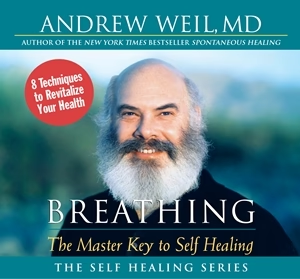
The 4-7-8 technique is showing up in many places. I am not sure where it originated, but I first learned about it from Dr. Andrew Weil on a CD set I bought more than 10 years ago.
While I’ve sampled many 4-7-8 versions, I find Dr. Weil’s direction and counting to be the easiest to follow.

#2: Insight Timer
Insight Timer has a free version with a very broad offering from a simple, adjustable meditation timer to guided meditations for many occasions (e.g., starting your day, winding down, getting back to sleep). There are also multi-day courses. They also offer a paid version with expended content.
#3: The Breathe App
This is a very basic (also free) app that offers counting for several types of breathing techniques
- 4-7-8
- box breathing
- power breathing
- coherent breathing
The app also allows you to adjust the counting so it’s comfortable for you.

Research on tools to calm the nervous system
While you may not think of it as breathwork, sighing can be a form of breathwork. Sighing has been studied for its ability to change mood and reduce anxiety. In this post, we share what this research demonstrated.


